
ESA-Friendly Apartments in Austin - Know Your Rights
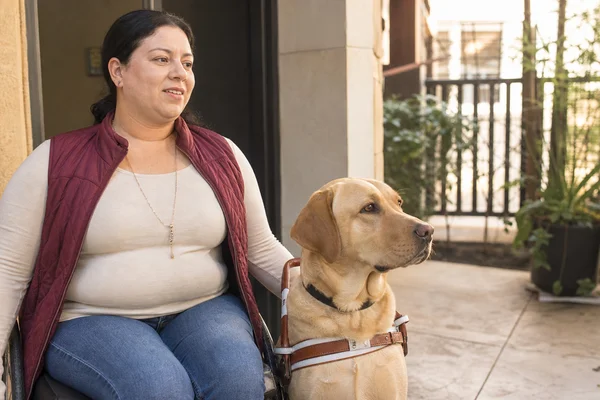
Federal fair housing law requires Austin apartment communities to make reasonable accommodations for tenants with disabilities who need assistance animals, including emotional support animals and trained service animals. That means no pet deposits, no pet rent, no breed restrictions, and no weight limits for qualifying animals. We identify which Austin communities follow the law correctly and guide you through the documentation process so your accommodation request is handled without unnecessary friction.
Last updated: June 20, 2026
What Really Happens at Austin Leasing Offices
Federal fair housing law requires Austin apartment communities to make reasonable accommodations for tenants and applicants with disabilities who need assistance animals, including emotional support animals (ESAs) and trained service animals. The legal requirement is broad: no pet deposits, no pet rent, no breed restrictions, and no weight limits for qualifying animals once an accommodation is approved.
But the gap between what the law requires and what actually happens at a leasing office is real.
Some Austin communities - from garden-style apartments in North Austin to Class A high-rises in the Downtown core - have established accommodation request processes that are straightforward and fast. Submit your documentation from a licensed healthcare provider, complete the community’s intake form, and receive a response within a week. The process mirrors what the law intends.
Other communities request documentation they are not entitled to ask for, delay the process without reason, route you through multiple contacts, or create friction that discourages renters who do not know their rights from following through. Some property managers are genuinely unfamiliar with fair housing requirements for assistance animals. Others use process complexity as an informal barrier.
Our team at Austin Second Chance Apartments identifies which Austin communities fall into which category. We have 20 years of Greater Austin real estate experience, led by Ross Quade, a Licensed Texas Realtor (TREC #679806) brokered through Spirit Real Estate Group and a member of the Austin Apartment Association. We know the communities with clean accommodation track records, the ones using established third-party platforms for accommodation review, and the ones where renters frequently run into problems.

What Landlords Can and Cannot Ask About Your ESA
The Fair Housing Act and HUD guidelines create a specific process for assistance animal accommodation requests. Understanding what landlords can and cannot do is the foundation of navigating the process correctly.
What the Housing Provider Must Do
When a tenant or applicant requests a reasonable accommodation for a disability-related need, the housing provider must engage in an interactive process to evaluate the request. HUD guidelines require that the provider respond within a reasonable time, generally understood to be 10 business days or fewer for routine requests. If the provider has questions about the documentation or the disability-related need, they must raise those questions and give the applicant a chance to respond rather than simply denying the request.
If the accommodation is reasonable, the provider must grant it. That means waiving pet deposits, pet rent, breed restrictions, weight limits, and any other pet policy terms that would otherwise apply to the animal. Under the Fair Housing Act, the animal is not classified as a pet when it qualifies as an assistance animal.
What the Housing Provider Can and Cannot Ask
Housing providers can ask for documentation from a reliable third party confirming that the applicant has a disability (if the disability is not obvious or known) and that the animal provides support related to that disability.
Housing providers cannot ask for a specific diagnosis or medical records. They cannot require a specific form or certification. They cannot require that the documentation come from a particular type of provider or registry. They cannot require in-person visits as a prerequisite to evaluating the documentation. They cannot demand that the animal have specialized training if the request is for an ESA rather than a trained service animal.
Legitimate ESA documentation is a letter from a licensed healthcare provider, such as a therapist, psychiatrist, licensed clinical social worker, or physician, who has an established relationship with the patient and can confirm the disability-related need. The letter should be on the provider’s letterhead and include their license number and contact information so the housing provider can verify it.
The Online ESA Letter Problem
The proliferation of online ESA letter services has created a genuine complication for legitimate ESA accommodation requests. Some services sell letters from licensed professionals who have no actual therapeutic relationship with the purchaser, sometimes for a flat fee with a quick online questionnaire. HUD guidance notes that third-party documentation should come from a reliable third party, and Austin property managers have become more skeptical of letters from services they recognize primarily as certificate sellers.
If your ESA letter comes from a provider with whom you have an ongoing therapeutic relationship, your documentation is on solid ground. If you are considering an online service, confirm that the service assigns a provider who conducts a genuine evaluation and who can be contacted for follow-up if the housing provider raises questions. An unverifiable letter can delay or derail an otherwise straightforward accommodation request.
How Apartment Communities Handle Assistance Animal Requests
Not every Austin apartment community uses the same process. Understanding the differences tells you where to expect a straightforward experience and where to prepare for more complexity.
National Firms With Established Processes
The majority of larger, nationally managed apartment communities in Austin route accommodation requests through a corporate accommodations office or a third-party platform such as PetScreening. These properties have standardized intake forms, defined response windows, and staff trained on fair housing accommodation review.
The advantage is consistency. Corporate-level accommodation teams review requests the same way every time and are generally well-versed in what HUD guidelines require. The timeline is predictable, the documentation requirements are stated clearly, and the process is less dependent on an individual leasing agent’s familiarity with fair housing law.
These communities are concentrated in new construction near the Domain, the North Austin tech corridor, and along East Riverside Drive. They represent a significant portion of Austin’s current apartment supply, and for renters with properly documented ESA needs, they are often the most reliable option for a friction-free process.
Locally Managed Properties
Independently and locally managed Austin communities handle accommodation requests at the property level. This can work well when the property manager is experienced and understands fair housing requirements. It can also create problems when the manager is unfamiliar with what they can and cannot ask for, when they delay without reason, or when they apply a no-pets policy to an accommodation request without understanding the legal distinction.
The timeline and experience at locally managed properties varies considerably. Some are responsive and professional. Others create friction that is not legally warranted. Our team knows the local management community across Travis, Williamson, and Hays counties - from independently owned complexes in East Austin and Mueller to smaller communities in South Lamar and Oak Hill - and can identify which properties have clean accommodation track records.
The PetScreening Platform for Assistance Animals
A number of Austin communities use PetScreening.com as part of their accommodation intake process. For assistance animals, PetScreening provides a separate no-charge registration path specifically for ESAs and service animals, separate from its standard pet profile system for regular pets. This path collects the accommodation documentation and routes it to the property management team for the actual accommodation decision.
PetScreening does not approve or deny ESA accommodations itself. It collects and organizes the documentation with timestamps and routes it to the property for review. For renters, the platform provides a consistent intake process and a documented submission record. For property managers, it standardizes what they receive and separates assistance animal requests from routine pet applications.
Communities using PetScreening for assistance animal accommodation tend to have clearer response timelines and less inconsistency between staff members handling the request.
The ESA Approval Process from Application to Move-In
Most renters with properly documented ESA needs who work with Austin communities that have established accommodation processes experience a straightforward path.
You obtain documentation from a licensed healthcare provider who confirms your disability and the disability-related need for the animal. The documentation should be on the provider’s letterhead and include their license number and contact information.
You submit the documentation to the community’s accommodation request process. For nationally managed apartment complexes, this is typically an online form or a PetScreening ESA registration. For locally managed garden-style or mid-rise communities, you may submit directly to the leasing office or management company. You may also need to provide basic information about the animal, such as species, breed, weight, and current vaccination status.
The community reviews the request and responds within a reasonable time. HUD’s interactive process requirement means that any questions about your documentation must be raised directly with you rather than used as grounds for immediate denial. If a community simply declines without engaging with you on the documentation, that response may not meet their legal obligations.
Once approved, the accommodation is documented in your lease file. No pet deposit, no pet rent, no breed restriction, and no weight limit applies to the approved assistance animal. You remain responsible for any actual damage the animal causes during your tenancy, which is handled through normal security deposit and damage claim processes at lease-end.
What a Locator Does That Listing Sites Cannot
Apartment listing sites show you unit availability and general pet policies. They do not tell you whether a property’s no-pets policy extends improperly to accommodation requests, which communities use PetScreening versus an in-house review, which communities route requests through a corporate team with a consistent process, or which communities have a history of accommodation request problems.
We contact Austin area property managers and leasing offices directly - from large management firms like Greystar and Lincoln Property Company to independent landlords - and ask the questions that matter for ESA and service animal accommodation requests. Which accommodation review process does the community use? Is there a corporate accommodations team or is the request handled at the property level? What is the typical response timeline? What documentation does the community require from the healthcare provider?
This information is almost never available on a listing site and changes as communities update their management structures and screening vendors. Spending your time at a community that will not handle your accommodation correctly regardless of how complete your documentation is means a frustrating process and potentially a delayed move-in.
| Feature | DIY Listing Site Search | Austin Second Chance Apartments |
|---|---|---|
| ESA accommodation process vetting | Not available | Direct confirmation with leasing offices |
| PetScreening vs in-house process info | Not shown | Verified for each community |
| Response timeline data | Unknown | Tracked across 100+ Austin communities |
| Fair housing compliance history | Not tracked | Known from 20 years of local experience |
| Cost to renter | Free (no locator help) | Free (commission-paid by property) |
The Austin Second Chance Apartments locating service is 100% free for renters. Property marketing budgets pay our referral commission when you sign a lease. You pay the same monthly rent whether you used a locator or walked in directly. The ESA-specific research, community vetting, and process guidance are part of the free service.
Our team is led by Ross Quade, a Licensed Texas Realtor (TREC #679806) brokered through Spirit Real Estate Group, with over 20 years of Austin real estate experience. We serve renters across Greater Austin 7 days a week.
Emotional Support Animal Apartments Across Greater Austin
We work with renters who need ESA and service animal accommodation across Travis, Williamson, and Hays counties. Renters searching in Round Rock, Pflugerville, Cedar Park, and the Kyle and Buda corridor encounter a different mix of national and local management than renters in central Austin, and that mix directly affects how accommodation requests are handled.
Suburban and outer-ring communities in Round Rock, Georgetown, and the Kyle-Buda corridor tend to have a higher proportion of local and regional management, which means more variability in the accommodation process. Central Austin’s newer high-rise and mid-rise apartment complexes - particularly along the I-35 corridor and near the University of Texas campus - are more likely to be nationally managed with established corporate accommodation processes and consistent timelines.
The Austin rental market as of mid-2026 has elevated vacancy rates and widespread concessions across the metro. Property managers at partially vacant communities are more attentive to qualified applicants, including those with properly documented assistance animals, than they were when vacancy was tight and waiting lists were long. If your documentation is in order, the current market conditions support a straightforward search.
You can reach our team 7 days a week by phone at (512) 320-4599, by text at (512) 903-3309, or through the contact form on this page.
Find Austin Apartments That Handle Your ESA Accommodation Correctly
We identify which Austin communities follow fair housing law for assistance animals. 100% free to renters.
Same-day tours • 7 days a week • 100% free for renters
What's Included With This Service
Identification of Austin communities with established, smooth fair housing accommodation processes for ESAs and service animals.
Guidance on your fair housing rights: no pet deposit, no pet rent, no breed restriction, and no weight limit for approved assistance animals.
Help understanding what documentation landlords can and cannot legally request for an ESA accommodation under HUD guidelines.
Knowledge of which Austin communities use third-party platforms like PetScreening for accommodation requests versus in-house processes.
Clarification on the distinction between ESA protections and trained service animal protections under the Fair Housing Act and ADA.
Same-day tours and 24 to 48 hour placement support, 7 days a week across Greater Austin, paired with community-level insider knowledge.
Why Austin Renters With Difficult Histories Choose Us
Fair Housing Knowledge
We know HUD's guidelines for assistance animal accommodation and which Austin communities follow them correctly. That knowledge prevents you from spending time and application fees at properties that handle requests improperly.
100% Free For Renters
ESA-friendly apartment locating is free to you. Property marketing budgets pay our referral commission when you sign a lease, so the research, guidance, and tours cost you nothing.
Breed and Weight Restriction Protection
Approved assistance animals cannot be denied based on breed or weight restrictions. We match you only with communities that understand this and have a track record of honoring it.
Judgment-Free, Always
We handle accommodation requests professionally and explain the documentation process plainly, with no judgment about your disability or the type of animal you need.
How It Works, Step by Step
Tell Us About Your Animal and Situation
Share whether you have an ESA or a service animal, what documentation you currently have or plan to obtain, your budget, and your move-in timeline. The more detail you provide, the more precisely we can match you to communities with appropriate processes.
We Research Accommodation-Ready Communities
We identify Austin communities with established ESA and service animal accommodation processes, flag those with a history of compliance issues, and confirm which properties use PetScreening or corporate-level review for faster, more consistent outcomes.
Tour the Right Properties
We send you a shortlist of communities confirmed to handle accommodation requests properly. Same-day tours are available 7 days a week across Travis, Williamson, and Hays counties.
Submit Your Accommodation Request
We guide you through the documentation that meets HUD's standard, help you understand what the community can and cannot request, and confirm the process so your accommodation request is handled within the timeframe the law requires.
The Work


Approvals That Felt Impossible
Renters with tough histories, helped by Ross and Marlene.
"I had a broken lease and two denials before I called Ross. He only sent me to places that would actually work with my history, I was approved in two days and didn't waste a single application fee."
Destiny R.
Austin, TX
"An eviction from years ago was haunting every application. Ross knew exactly which Austin properties review case-by-case and walked me through a landlord letter. Approved."
Janelle P.
Pflugerville, TX
"Judgment-free is the right way to describe it. I was embarrassed about my credit and they just got to work finding me a great place near my job. Highly recommend."
Sofia M.
Kyle, TX
Questions About This Service
The honest answers we give every day.
Can an Austin apartment deny my emotional support animal?
+
What documentation do I need for an ESA in Austin?
+
Do I have to pay pet rent or a pet deposit for an ESA?
+
Can my ESA be a restricted breed such as a pit bull or Rottweiler?
+
What is the difference between an ESA and a service animal for apartment housing?
+
Is your ESA apartment locating service free?
+
How long does an ESA accommodation request take to process in Austin?
+
Stop Paying Fees at Properties That Won't Approve You
Tell us your situation. We'll only send you where you have a real shot. Same-day tours, 24–48 hour approvals, 100% free for renters.
Same-day tours • 7 days a week • 100% free for renters